

Thank you for Subscribing to Med Tech Business Review Weekly Brief
MedTech Business Review: Specials Magazine
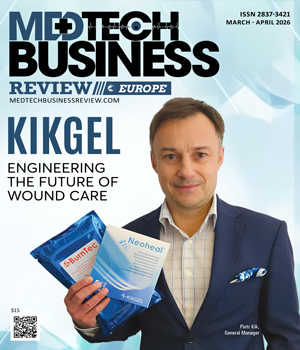
For over three decades, Kikgel has focused on producing sterile hydrogel dressings at scale, under strict regulatory control, with reliability as the governing priority. What makes Kikgel’s approach to wound care different from others in the industry? That discipline emerged from a central question. How to engineer a dressing that soothes instantly, adapts to the body, never sticks to the wound and still holds nearly 90 percent water without collapsing? Kikgel began answering that question long before moist-wound therapy became standard practice. A pioneer among European manufacturers, it supplies clinically-proven hydrogel dressings to healthcare systems, emergency responders and surgical specialists. The dressings support moist wound healing while preserving structure, sterility and patient comfort. “Our focus has always been on producing hydrogel dressings that are both clinically effective and reliably manufactured,” says Piotr Kik, general manager. Kikgel’s hydrogel dressings play a central role in the treatment of first and second-degree burns, where no alternative offers comparable moisturization and soothing effects. They also support autolytic wound debridement and function alongside therapies such as hypochlorite and silver dressings that require a moist environment to maintain activity. An aqueous environment promotes enzymatic function and growth factor activity, supporting natural healing processes. Over the years, thousands of burns and ulcers have been treated using Kikgel’s hydrogel solutions.
Wound Care
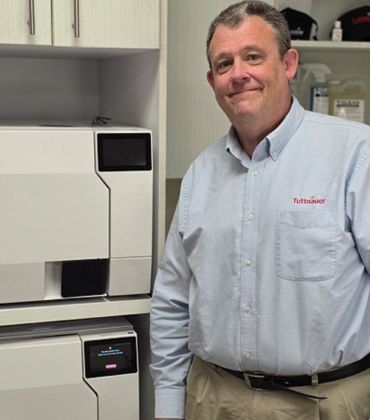
The rapid influx of complex instruments into integrated delivery networks (IDN) is reshaping the healthcare landscape. Many of these devices require pre- and post-vacuum steam sterilization for validation—capabilities that smaller care settings often lack. The mismatch has created operational blind spots in clinics and ambulatory surgical centers, forcing providers to rely on outdated sterilization equipment and exposing them to compliance risks. What sterilization capability gaps does Tuttnauer address as complex instruments enter integrated delivery networks? Tuttnauer fulfills this unmet need. Its T-TOP10 and T-TOP11 are the only tabletop autoclaves capable of sterilizing instruments using both gravity and pre- and post-vacuum steam cycles. By ensuring full validation and compliance with FDA and CDC guidelines, they give practices the freedom to introduce advanced instruments without worrying about compatibility. A global leader in manufacturing infection control and sterilization equipment, Tuttnauer has been at the forefront of the industry for a century. With over 1,200 distributors across more than 150 countries, the company serves medical, laboratory, dental and veterinary sectors. Its portfolio spans the smallest tabletop sterilizer to the largest autoclave and washer, driving consistency and standardization across IDNs. It also provides comprehensive client education along with planning, design and installation services.
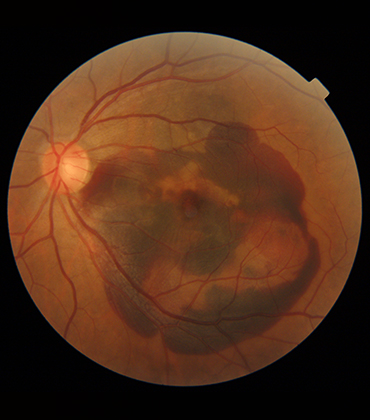
Advancements in ophthalmic diagnostics technologies are opening new possibilities for smarter workflows and consistent, high-quality imaging. Topcon Healthcare is spearheading this movement with the highest quality solutions designed with Japanese innovation. A global provider of optical coherence tomography (OCT) and fundus imaging technology, the company is leading the industry with its flagship devices, including the Maestro2, DRI OCT Triton and NW500. Its products empower clinicians to detect, assess and manage eye diseases with high-quality data, quickly. By integrating automated intelligence with clinical reliability, Topcon Healthcare enhances the efficacy and accessibility of eye care. Each system reflects its commitment to simplifying the demands of modern eye care, from automated multimodal imaging and data consolidation to workflow integration and clinical decision-making. For instance, many clinics face mounting pressure to deliver consistent, high-quality diagnostic results while handling patient load, fragmented systems and rising administrative demands. At the same time, there is an increasing need to ensure data security, meet interoperability standards and uphold clinical accuracy without sacrificing time. Topcon Healthcare addresses these challenges by developing systems and software that function as part of an interconnected, intelligent workflow rather than isolated devices that require constant workarounds. This approach is reflected in Maestro2, a multimodal imaging system that captures fundus photography simultaneously with OCT or OCT angiography within a single, automated scan. It streamlines image acquisition and removes the need for multiple instruments or manual inputs. With this system, eye care professionals can access a detailed assessment of ocular health in less time, and staff can confidently delegate imaging responsibilities, given the system’s built-in repeatability and precision.
Wound Care
The quality of the total parenteral nutrition (TPN) admixture for infusion depends on the compatibility and stability provided by the compounder. Scalable and efficient medical equipment helps pharmacists administer multiple source fluids of nutritional admixtures to patients incapable of oral or enteral feeding. Hemedis is a specialist in the development and production of compounders for diverse mixed infusions and parenteral nutrition for manufacturing centres, hospitals and pharmacies. It is a part of the Hegewald Group and focuses on transferring and mixing fluids from pharmaceutical source containers into bags, syringes, elastomeric pumps, vials and cassettes. This is achieved by adhering to stringent standards of accuracy, traceability, cleanliness and documentation. “Hemedis provides a secure, efficient and flexible fluid management solution suitable for small standalone units of pharmacies as well as large compounding centres,” says Robert Hegewald, managing director. Innovation, flexibility and close proximity between market and production form the foundation of the company’s success. Hemedis replaces traditional peristaltic pumps that require frequent replacements and produce pulsations by collaborating with external experts to develop MIBMIX® for mixing TPN, the first compounder with 12 independent physical channels. This device, through further innovation, offers scalability ranging from 1 to 24 channels, making the product the highest-selling compounder in Germany.

Medical Device Sales
Quality in the World of Medical Device Contract Manufacturing
Stacey Lyons, Plastics Quality Director, Biomerics
Medical Equipment Maintenance

The Art of Bridging the Gap between Technical Expertise and Regulatory Intelligence
Stefanie Hirsch, Chief Sustainability & Quality Officer - Member of the Executive Board, Drägerwerk AG & Co. KGaA (Dräger)
Wound Care

Innovating Cardiac Care: A Journey Through the Evolution of Medical Technology
Alphons Vincent, Medical Director, Medtronic [NYSE: MDT]
Wound Care

Improving Patient Safety and Care with Implementing New Programs
Melissa Morgan, AVP, Quality, Safety, and Regulatory, Orlando Health
Wound Care

Cohesive Culture Key to Manufacturing Under Duress
Derek McKenney, Vice President, Manufacturing Operations, Puritan Medical Products
IN MY OPINION
Wound Care
Strategic Decision Modeling and Innovation Pulses in the Digital Age
Yasser Elshantaf, Director Center of Expertise, Enterprise Applications (CoE-EA), BIOTRONIK

LAST WORD
Packaging and Sterilization
Optimizing Molding Processes and Driving R&D Excellence
Eric Huang, Engineering Manager, Alcon
IN FOCUS

Revolutionising Wound Care: The Future of Hydrogel Technology across Europe
Efficient sterile hydrogel manufacturing integrates precise polymer science with strict operational standards to improve European clinical wound care.

Clinical Safety Systems: Advanced Sterilization And Pathogen Prevention
Sterilization and infection control solutions form the backbone of clinical safety and public health protocols by preventing pathogen transmission across healthcare, laboratory, and communal environments. These solutions encompass a broad array of technologies and practices
EDITORIAL
Engineering the Future of Sterile Hydrogel Care
Sterile hydrogel technologies are redefining advanced wound management across Europe, where clinical performance must align with regulatory rigor and scalable manufacturing. In this issue of MedTech Business Review Europe, we examine how disciplined engineering, validated processes and cross-functional leadership are shaping the next standard in sterile hydrogel dressings.
Recognised as the Top Sterile Hydrogel Dressings Manufacturer in Europe 2026, Kikgel has built its position on manufacturing precision and scientific continuity. As detailed in the profile, the company has spent more than three decades producing sterile hydrogel dressings under strict regulatory control, addressing the fundamental engineering challenge of maintaining nearly 90 percent water content without compromising structural integrity.
Its electron beam cross-linked polymers deliver oxygen permeability, bacterial resistance, non-adherence and biocompatibility. From early collaboration with Lodz University of Technology to today’s ISO 13485-compliant operations, CE marking, FDA registration, and ISO 7 cleanroom production, Kikgel has translated research into validated industrial-scale operations. Production has doubled to one million units annually, with international expansion underway, reinforcing manufacturing discipline as the foundation of clinical trust.
This issue also features perspectives that extend beyond wound care. In his contribution, Dan Dror Siman-Tov, Senior Director of R&D at Meridian Bioscience outlines the centrality of R&D leadership in the new product development life cycle, emphasising design controls, regulatory alignment and cross-functional accountability. Complementing this, Alphons Vincent, Medical Director, Medtronic, reflects on the evolution of cardiac rhythm technologies and the measured introduction of leadless pacemakers, underscoring patient safety, structured training and responsible AI integration.
Together, these narratives reinforce that durable impact in medtech emerges from disciplined execution, regulatory clarity and leadership that balance innovation with control. We invite readers to engage with the full articles and examine how structured governance is defining Europe’s next phase of clinical manufacturing excellence.
