


Thank you for Subscribing to Med Tech Business Review Weekly Brief
MedTech Business Review: Specials Magazine
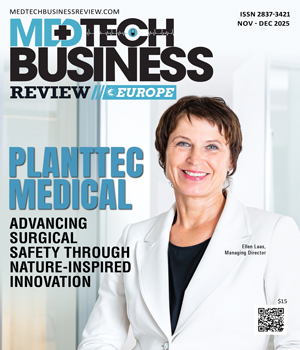
Abdominal surgery today saves countless lives and restores health for millions, yet one of its most persistent challenges continues long after the operation—postoperative adhesions. These internal scar tissues can lead to chronic pain, digestive disorders and infertility in women, and in severe cases, bowel obstruction requiring additional surgery. PlantTec Medical is redefining surgical safety with 4DryField® PH, a natural starch-based material that ensures clean hemostasis and protects tissue from postoperative adhesions. 4DryField®PH is built from modified plant-based polysaccharides that are highly biocompatible, non-allergenic and free from synthetic or animal-derived substances. It combines natural purity with clinical performance for improved quality of life for every patient. Applied as a fine powder, it instantly stops surgical bleeding and when transformed into a a soft gel, it shields the tissue physically and minimizes the risk of adhesion formation. Its composition is safely degraded within the body, leaving no toxic residues. “Our philosophy is built on our belief that true innovation must serve patients and the environment,” says Ellen Laas, managing director. During reoperations, adhesions also extend surgical time, increase blood loss and elevate injury risk. With nearly half of Germany’s population expected to undergo abdominal surgery in their lifetime, the need for reliable adhesion prevention has never been more critical.
Founded in 2017, LITH-TECH Mobility began as a small-scale, low-overhead start-up that, after extensive research, identified a gap in the UK mobility market for a new type of product that was gaining traction in the United States: the lightweight folding powerchair. Over the next year, LITH-TECH made it their mission to understand the global folding powerchair market inside and out. They studied a wide range of disabilities, visited the world’s leading factories, and carefully researched which companies produced the strongest, most reliable, and highest-quality parts and components within the industry. The CEO admitted that the team’s early research and deep understanding of the market at times bordered on obsession. This intense focus was without a doubt what enabled LITH-TECH to grow and scale so quickly. From day one, they have pursued excellence by offering the highest-quality products and setting the standard for service in the industry. By 2020, LITH-TECH had become the UK’s go-to independent folding powerchair specialist, and their brand and products had built a strong reputation within the mobility sector. What makes LITH-TECH different as a company is that they deal exclusively with end users, never selling through small mobility shops. This means that any potential customer with a disability who contacts LITH-TECH will always receive expert advice from a trained product specialist who understands both the full product range and the customer’s specific needs and disability. This ensures that each customer is guided toward the right chair, properly configured with the necessary add-ons or modifications to make it perfect for their shape, size, and intended use. Today, LITH-TECH has a team of six employees, three of whom are highly trained sales specialists with knowledge of folding powerchairs and disabilities that is unrivalled within the industry. The company conducts 80 percent of its business online or over the phone, without customers ever needing to see or trial the chair in person. This is possible due to their highly informative YouTube videos and in-depth phone consultations, during which specialists take time to understand every aspect of a customer’s requirements before making recommendations..

Musculoskeletal Device Manufacturer

Advancements in prosthetics and orthotics are redefining human mobility and functionality through innovations. They are instrumental in restoring lost capabilities and pushing the boundaries of physical rehabilitation, enabling individuals to pursue more active and fulfilling lifestyles. This drives a new era of potential for those in need. Globus Medical is leading the charge in the field of musculoskeletal systems, specializing in the development of medical devices for prosthetics and orthotics to improve patients’ quality of life. The company’s exclusive attention to advancing surgical practices has positioned it as the fastest-growing company. Its dexterity to innovate and deliver exceptional clinical support steers it ahead of the competition in the healthcare industry. Its services comprise an impressive array of spine products, including anterior and posterior cervical and lumbar, HEDRON 3D printed titanium interbody spacers and expandable technology. These address various spine ailments, including degenerative conditions, deformity, tumors and trauma. The company also develops solutions for interbody fusion, corpectomy and interspinous fixation, which allow for intraoperative customization per patient’s anatomy and can help save surgical time by eliminating progressive testing. “With a relentless focus on changing patient lives, we’re combining our differentiated portfolios and talented teams to reach more customers as we advance spine and orthopedic care globally,” says Daniel Scavilla, president and CEO. Globus Medical’s proficiency is rooted in understanding the needs of surgeons and patients alike, ensuring that its products meet the highest standards of quality and effectiveness. Advancing Surgical Precision And Patient Care A standout feature of Globus Medical is its Excelsius Technology, which seamlessly integrates robotics and navigation to improve surgical precision and efficiency. This cutting-edge system comprises ExcelsiusGPS and Excelsius3D. The ExcelsiusGPS technology incorporates a powerful robotic arm and full navigation features to significantly improve surgical accuracy, particularly in spine and cranial procedures, ultimately enhancing patient care. Excelsius3D functions as an advanced imaging unit, providing automatic image registration and consolidating imaging modalities into a single system, facilitating adaptable and navigable multidisciplinary procedures. In one instance, a young woman diagnosed with lipomyelomeningocele, a severe form of spina bifida, faced chronic pain that left her bedridden despite undergoing numerous surgeries that failed to alleviate her condition. Johns Hopkins Hospital used Globus Medical’s ExcelsiusGPS to perform a total vertebral body resection, which resulted in the shortening of the spinal column and alleviation of tension in her spinal cord. This surgical intervention had a life-changing impact as it significantly improved her quality of life post-surgery, allowing her to walk pain-free after years of suffering.
Medical Devices and Equipment Manufacturing

Technology for Treatment and Prevention of Mental Illness
Dr. Karl Marlowe, Chief Medical Officer, Oxford Health NHS Foundation Trust
Medical Devices and Equipment Manufacturing

Efficiently Implementing Preventative Maintenance Programs with Skilled Engineers
Mark Hornby, Medical Engineering Manager, Northern Care Alliance NHS Foundation Trust
Medical Suppliers and Distributors

Sustainable Healthcare is more than Just Emissions
Lucy Brown, Head of Sustainability, Circle Health Group
Medical Devices and Equipment Manufacturing

Driving Innovations in Healthcare Using AI
Dr. James Risley, BMedSci(Hons) BMBS MRCS DOHNS GDL LLM FRCEM FFMLM MBA, Deputy Executive Medical Director, Betsi Cadwaladr University Health Board
Medical Devices and Equipment Manufacturing

AI-Opportunities in Teaching Healthcare Professionals Today
Gil Figueiredo, Corporate Matron, James Paget University Hospitals NHS Foundation Trust

IN MY OPINION
Medical Devices and Equipment Manufacturing
Bridging Innovation, Precision and Care
Puteri Abdul Haris, Consultant in Clinical Oncology, Oxford University Hospitals NHS Foundation Trust

LAST WORD
Medical Devices and Equipment Manufacturing
Revolutionizing Ambulance Services-The Future of Emergency Care in Europe
Thomas Bjarnt, Transformation Specialist, Falck
IN FOCUS
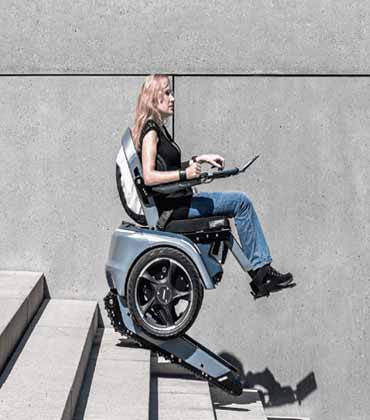
Europe's Folding Electric Wheelchair Market Evolution
Folding electric wheelchairs improve mobility, portability, and independence; market growth stems from ageing populations, tech advances, and demand for lightweight, connected, and travel-friendly solutions.
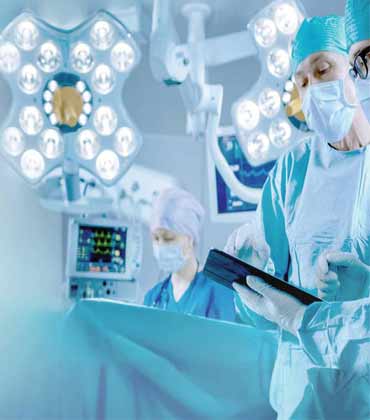
Navigating the European Medical Device Landscape: Strategies for Success
Medical device manufacturers in Europe must focus on regulatory compliance, technological innovation, and strong partnerships to succeed in the market.
EDITORIAL
A Growing Market Meets Rising Standards in Europe’s MedTech Sector
The European medical device sector is closing 2025 with steady momentum, supported by demographic shifts and policies that prioritise accessible healthcare. A key driver of this growth is the folding electric wheelchair segment. Demand continues to rise as the region’s ageing population looks for portable, easy-touse mobility options, and as governments reinforce disability access through national initiatives and EU-level frameworks. Western Europe remains the core market, backed by mature healthcare systems, broad medical device adoption and ongoing funding tied to the EU Disability Strategy 2021-2030.
Even so, suppliers across mobility and wider medical technologies are navigating a challenging regulatory landscape. The introduction of the EU Medical Devices Regulation has elevated safety and performance expectations, adding significant documentation and testing requirements. These shifts have increased time-to-market, raised compliance costs and complicated cross-border operations, creating hurdles for both established players and new entrants.
To stay competitive, leading manufacturers are sharpening their innovation and operational strategies. R&D efforts are intensifying, with new features such as smart battery management, AI-enabled navigation and digital connectivity becoming central to next-generation wheelchairs. Similar advances in digital health and precision technologies are influencing the broader medical device sector, with companies aligning product development closely to CE certification requirements. Many suppliers are also localising supply chains and establishing European assembly hubs to strengthen resilience in the face of global disruptions.
As reimbursement models and digital procurement evolve, suppliers who combine regulatory agility with user-centric innovation are best positioned to succeed in Europe’s dynamic healthcare market.
In this edition, we feature some of the industry’s most influential names, both companies and individuals. Among them is PlantTec Medical, reshaping surgical safety with 4DryField® PH, a plant-based innovation that prevents adhesions and improves patient outcomes. Leaders such as Puteri Abdul Haris, Consultant in Clinical Oncology at Oxford University Hospitals NHS Foundation Trust, and Thomas Bjarnt, Transformation Specialist at Falck, share their perspectives on market opportunities and challenges. We hope these insights help you make more data-driven, strategic business decisions.
