


Thank you for Subscribing to Med Tech Business Review Weekly Brief


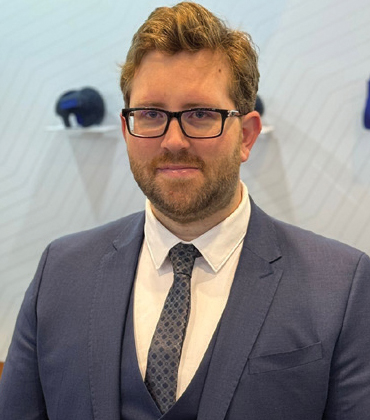 Boštjan Boltežar, CPO
What shift is occurring from traditional plaster casting to digital orthotics manufacturing?
Traditional orthotics and prosthetics were once defined by plaster casting, but the field has been shifting toward digital design and additive manufacturing. Leading this transformation since 2013, Certified Orthotists and Prosthetists Edita Boltežar Smuk and Žane Janez Boltežar have redefined patient care at MOOR Orthotics and Prosthetics with 3D-printed, digitally designed mobility devices. With over 35 years of experience, the company creates patient-specific devices that blend emerging technologies with family-led leadership and accountability.
At MOOR, clinical decision-making shapes every design, with digital manufacturing ensuring precision and repeatability. Anchored in this discipline, its 3D technology system brings together handheld 3D scanning, CAD-based design, and HP Multi Jet Fusion additive manufacturing in a single digital workflow. The company leverages these technologies to produce complex geometries, ventilation architectures, and controlled material structures that are not possible with conventional thermoforming or lamination.
“We are not digitizing old workflows; we are redesigning orthotics and prosthetics from first principles to enable better movement,” says Edita Boltežar Smuk, director.
How does MOOR integrate clinical evaluation with digital design and additive manufacturing processes?
From that principle emerged three flagship innovations, including the MOOR Pband Lite, 3D-printed Lower Limb Orthoses, and MOOR-FlexiForm. Behind each device is a multidisciplinary evaluation by certified prosthetists and orthotists, assessing strength, alignment, range of motion, and functional goals.
The MOOR Pband Lite cranial remoulding helmet, a lightweight design weighing about 120 grams, features a fully perforated shell with partial padding to maximize airflow. Its digitally engineered ventilation architecture reduces heat accumulation and improves wearability, supporting greater comfort and treatment compliance. Clinicians track progress using cranial symmetry indices, including cranial vault asymmetry and cephalic index, with the typical turnaround from scan to finished device just one to two weeks.
Why are digitally engineered orthoses important for improving mobility in pediatric conditions?
In lower limb orthotics, particularly for children with conditions like cerebral palsy, spina bifida, and congenital deformities, the company develops proprietary 3D-printed orthoses ranging from supramalleolar designs to knee-ankle-foot systems. Each device is biomechanically engineered to balance flexibility and rigidity for proper alignment, gait mechanics, and postural stability. Lightweight and breathable, the orthoses encourage consistent use, helping children move with confidence and participate more fully in daily activities while multidisciplinary teams monitor functional improvements over time.
-
We are not digitizing old workflows; we are redesigning orthotics and prosthetics from first principles to enable better movement.
The same thoughtful engineering extends to prosthetic solutions, including the MOOR-FlexiForm socket, which addresses daily fluctuations in limb volume. Manufactured from medical-grade HTV silicone, it dynamically adapts to movement and incorporates a pneumatic micro-adjustment system allowing users to fine-tune fit independently. Compatible with major suspension systems and refined with soft, non-abrasive edges and a clothing-friendly finish, the device enhances comfort, range of motion, and seated tolerance for both transtibial and transfemoral users.
In what way does digital workflow enhance customization, compliance, and patient-specific device outcomes?
Across all product lines, reduced unplanned clinic visits reflect the adaptability of MOOR’s digital design approach. Patient anatomy is captured through non-invasive scanning and converted into precise CAD models, where alignment, correction angles, pressure distribution, and functional parameters are defined. Based on these specifications, the company selects materials like PA11, PA12, and TPU, certified for skin contact and tested for durability and biocompatibility. Patients and parents are also involved in aesthetic decisions, selecting colors and patterns to transform devices into expressive, confidence-building tools.
Throughout the process, a dedicated software platform “Pentla” has been developed for configuration, tracking, and documenting each production stage, ensuring regulatory compliance with EU Medical Device Regulation (MDR) 2017/745, GDPR, and ISO 13485:2021. Guided by clinical leadership, MOOR maintains a contract with the Health Insurance Institute of Slovenia (ZZZS), collaborates with leading medical centers, and partners with the University of Ljubljana, as well as foreign universities, to train future professionals. With a subsidiary in Zagreb and an upcoming Saudi Arabia division, together with exclusive distribution partnerships, the company continues to expand its international presence.
As a family-owned business, MOOR advances digital workflows and sustainable additive manufacturing while adhering to established quality standards. Yet its guiding principle remains clinical, designing devices for precision, comfort, and long-term use. This foundation underpins the company’s role as a Top Orthotics and Prosthetics Medical Device provider, where clinical rigor and patient care guide every solution it delivers.
Advancing Precision and Patient Compliance in Orthotics and Prosthetics
Executives evaluating advanced orthotic and prosthetic medical devices face a complex mandate. Clinical efficacy must be demonstrable, regulatory compliance uncompromising and patient adherence consistently high. Traditional fabrication models built around plaster casting and manual modification continue to serve many providers, yet they limit precision, extend turnaround times and constrain design flexibility. The result is often a cycle of adjustment visits, compromised comfort and inconsistent wearing compliance, all of which dilute clinical impact and strain institutional resources.
Digital capture and additive manufacturing are reshaping this landscape. A handheld 3D scan eliminates the variability and discomfort associated with casting while producing an accurate anatomical model. In a MedTech environment defined by accountability and traceability, digital workflows also create a clearer design history and tighter process control. Precision at the design stage directly influences first-fit accuracy, reducing the frequency of unplanned follow-ups and improving overall service efficiency.
Device performance increasingly hinges on how well engineering intent translates into lived experience. Lightweight structures, engineered ventilation and calibrated flexibility zones can materially affect tolerance, especially in paediatric and high-sensitivity cases. When airflow is integrated into a cranial remoulding helmet rather than treated as an afterthought, heat build-up decreases and wearing time improves. When a lower limb orthosis integrates both rigidity and controlled flexibility within a single structure, gait quality and balance can improve without sacrificing comfort. Performance is no longer defined solely by correction angles or alignment metrics but by whether the patient can sustain prescribed usage over weeks and months.
Aesthetic integration is another factor often underestimated in executive discussions. Devices that appear overtly clinical can undermine adherence, particularly among children and adolescents. Thoughtful design that allows personalisation without compromising function shifts the emotional dynamic from stigma to acceptance. Compliance, which remains one of the most decisive predictors of treatment success, is reinforced when patients feel ownership rather than obligation.
Regulatory governance and material selection complete the picture. ISO 13485 certification, conformity with EU Medical Devices Regulation 2017/745 and documented traceability across production stages are not optional in European MedTech markets. Executives must also examine whether materials are certified for skin contact, whether manufacturing platforms deliver consistent tolerances and whether post-market surveillance processes are embedded into daily practice. Partnerships with established component manufacturers and structured digital production tracking further strengthen quality assurance and risk management.
Within this context, Moor Orthotics and Prosthetics demonstrates a coherent application of these principles. Founded in 1992 and led by clinicians with more than three decades of experience, it combines digital scanning, CAD-based design and HP Multi Jet Fusion manufacturing to produce proprietary devices that address identifiable clinical gaps. Its MOOR Pband Lite cranial helmet weighs approximately 120 grams and features a fully perforated shell to enhance airflow, improving wearing comfort and measurable cranial symmetry correction.
Its 3D-printed paediatric orthoses integrate controlled flexibility and breathability within a single structure. At the same time, the MOOR-FlexiForm prosthetic socket, manufactured in medical-grade HTV silicone with an integrated pneumatic micro-adjustment system, enables users to manage volume fluctuations independently. Supported by ISO 13485:2021 certification and MDR compliance, it offers a model that aligns clinical precision, patient adherence and regulatory discipline. For executives prioritising measurable outcomes and sustained patient use, it represents a credible benchmark in advanced orthotic and prosthetic solutions.
...Read more
Orthotics and Prosthetics Medical Device in Europe Info
Q1
Why is Moor Orthotics and Prosthetics recognized among top Orthotics and Prosthetics Medical Device Companies in Europe?
Moor Orthotics and Prosthetics has gained recognition through its early adoption of digital design and additive manufacturing technologies for patient-specific mobility devices. The company combines handheld 3D scanning, CAD-based design and advanced 3D printing to create customized orthotic and prosthetic solutions that prioritize precision, comfort and long-term usability. This technology-driven approach has helped establish its reputation among Orthotics and Prosthetics Medical Device Companies in Europe.
Q2
What differentiates Moor Orthotics and Prosthetics from traditional device manufacturers?
Digital engineering sits at the center of the company’s development process. Rather than relying on conventional plaster casting methods, Moor Orthotics and Prosthetics captures patient anatomy through non-invasive scanning and transforms that data into highly accurate digital models. Its Orthotics and Prosthetics Medical Device Companies in Europe expertise is further reflected in proprietary innovations such as the MOOR Pband Lite cranial helmet, customized lower limb orthoses and the MOOR-FlexiForm prosthetic socket.
Q3
How does Moor Orthotics and Prosthetics support patients and clinicians?
Clinical evaluation guides every stage of device development. Certified orthotists and prosthetists assess alignment, mobility, strength and functional goals before creating a customized solution. The company’s Orthotics and Prosthetics Medical Device Companies in Europe approach integrates digital tracking, production documentation and multidisciplinary collaboration to help ensure that each device aligns with individual patient requirements. This emphasis on personalization supports improved comfort and treatment adherence.
Q4
How do the company’s solutions create value for users?
Improved mobility and patient compliance are key outcomes of the company’s device portfolio. Lightweight structures, engineered ventilation systems and carefully balanced flexibility contribute to greater comfort during daily use. Through its work as one of the Orthotics and Prosthetics Medical Device Companies in Europe, Moor Orthotics and Prosthetics develops products designed to reduce unnecessary clinic visits while supporting consistent device wear and functional improvement.
Q5
What role do innovation and technology play in the company’s growth?
Advanced manufacturing technologies continue to shape the company’s evolution. Moor Orthotics and Prosthetics uses HP Multi Jet Fusion additive manufacturing alongside specialized software that manages configuration, production tracking and quality documentation. Its position among Orthotics and Prosthetics Medical Device Companies in Europe is strengthened by ongoing investment in digital workflows, material science and patient-focused product development that expands design possibilities beyond traditional fabrication methods.
Q6
Why is Moor Orthotics and Prosthetics relevant to modern rehabilitation and mobility care?
Healthcare providers increasingly seek solutions that combine clinical precision with efficient production and regulatory compliance. Moor Orthotics and Prosthetics addresses these needs through digitally engineered devices supported by ISO 13485:2021 certification and compliance with EU Medical Device Regulation requirements. Its continued collaboration with medical institutions, universities and international partners reinforces its relevance among Orthotics and Prosthetics Medical Device Companies in Europe focused on advancing patient mobility and rehabilitation outcomes.
